FSU CIRCUS TENT - Tallahassee, FL
Challenge
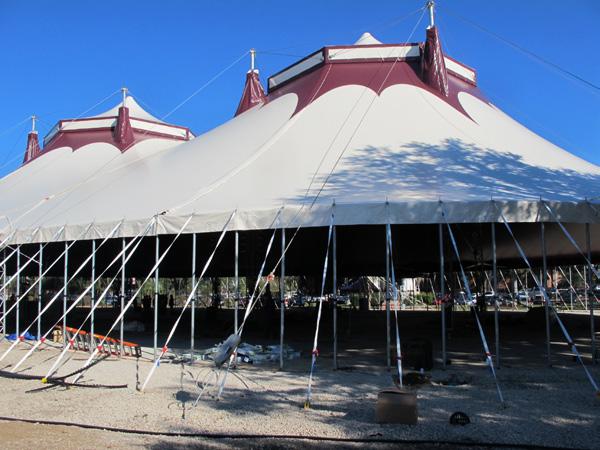
Florida State University (FSU) claims to have the only tented collegiate circus in the world, having operated for over 60 years. The FSU Flying High Circus planned to replace their old tent with an 18,000 square-foot double cupola “Big Top” tent. The eight main columns near the center would be supported with shallow spread footings. The tops of the main columns would be interconnected with cables and then braced with guy wires and a tie-down system. The perimeter of the tent would be supported with small diameter steel pipe columns with the bottoms of the columns pinned to the concrete slab and the tops of the columns pulled/braced with ratchet straps to a tie-down system. The tent would remain constructed year-round. Six test borings identified sandy clay and fine sand fill soils within the top five to ten feet of the soil profile. Standard penetration test (SPT) blow count values within the fill varied widely from three to 34 blows per foot, with an average value of ten blows per foot. The fill was underlain by native sandy clay and clayey sand to the bottoms of the borings at 20 feet. SPT values within the native alluvial soils ranged from five to 20 blows per foot.
Solution
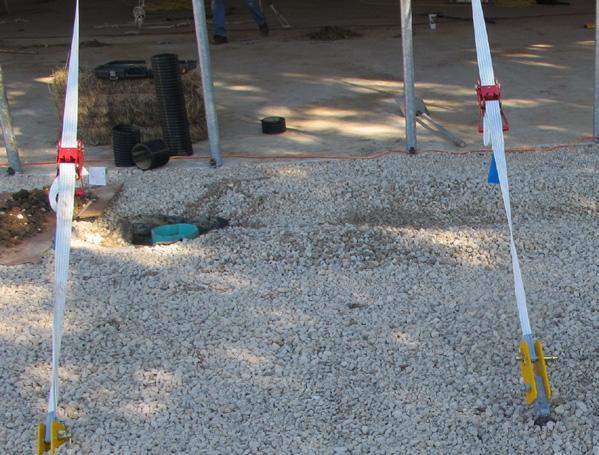
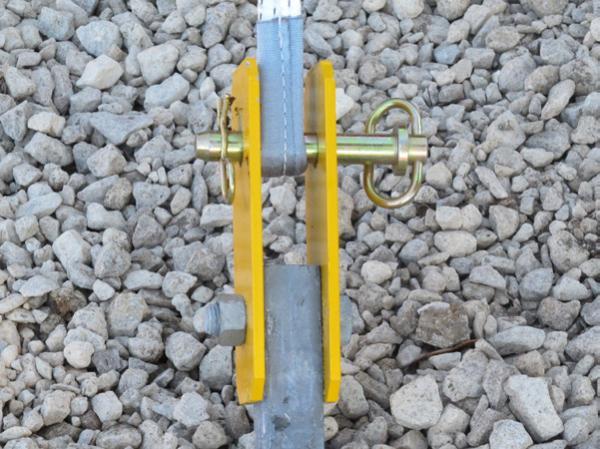
Helical anchors were selected to provide the tie-down support for the tent. Helical anchor capacity can be estimated by correlation to the installation torque and a relative soil strength profile can be generated by monitoring installation torque continuously. Both are considered benefits of helical anchors, especially for a site with variable fill soils. The tie-down system design included two helical anchor configurations to support design working loads of 2.7 to 6.6 kips (tension). Forty-five (45) Model 150 (1.5-inch round corner square bar) anchors with 10”-12” double-helix lead sections were installed to lengths of 14 feet to support the main columns. These anchors were installed vertically and at 45-degree angles, fitted with new construction brackets and cast into concrete pile caps. One hundred nine (109) Model 150 anchors with 12” single-helix lead sections were installed around the perimeter of the tent with lengths of seven feet. The lower capacity perimeter anchors were installed at an angle of 45 degrees, matching the design angle of the ratchet tie-down straps. Ultimate anchor capacities determined by correlation to installation torque were generally greater than twice the design working loads. Tension load tests were completed on two non-production seven-foot long helical anchors. Ultimate capacities and deflections were acceptable for both of the anchors tested. The 154 helical anchors and two load tests were completed in only three days.
Project Summary
Products Installed: (154) Foundation Supportworks® Model 150 Helical Anchors, 12” Single-Helix and 10”-12” Double-Helix Lead Sections, Installed to Lengths of 7 and 14 feet, Design Working Loads of 2.7 to 6.6 kips