Fish Ladder Music Park
Challenge
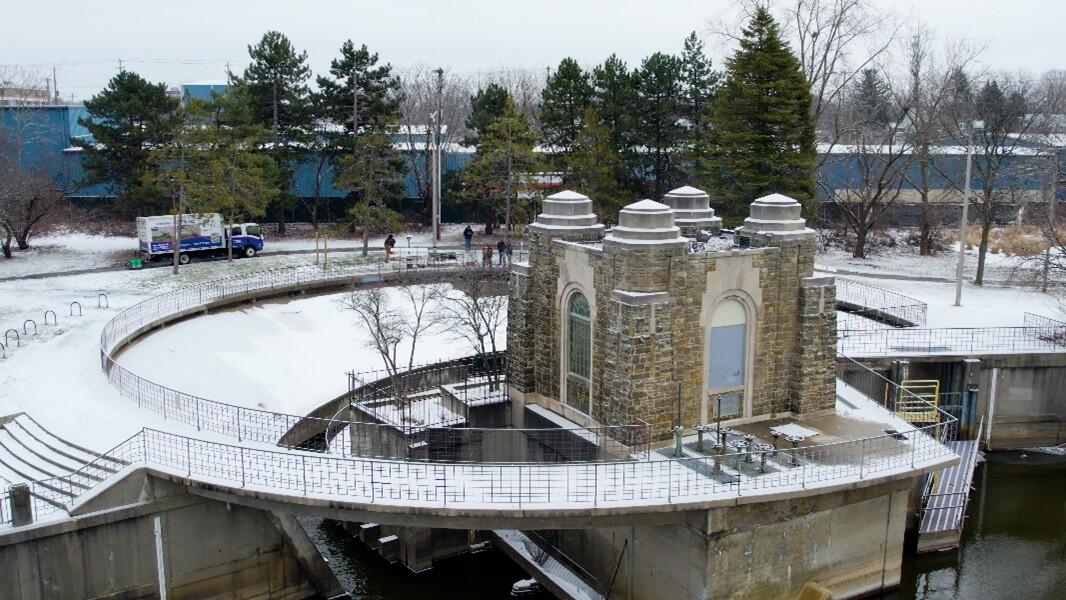
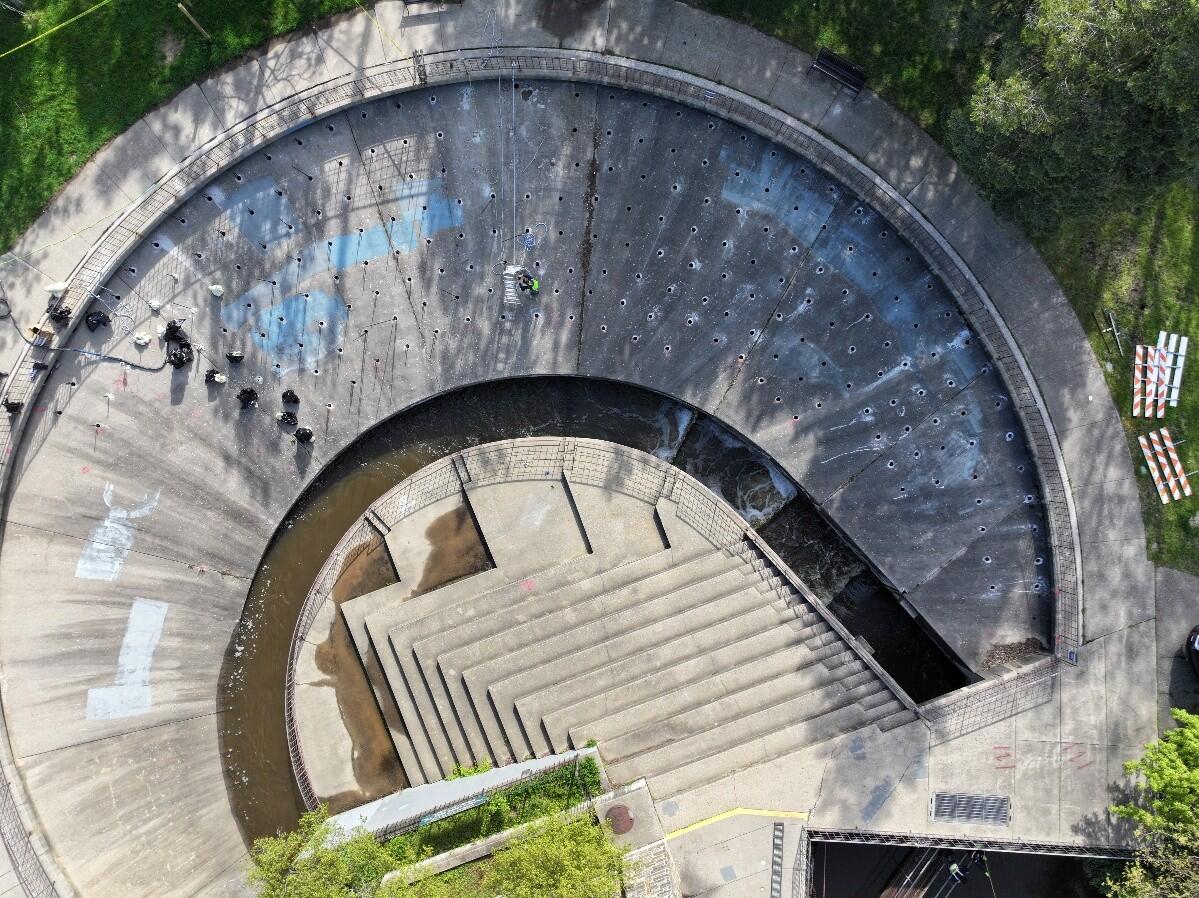
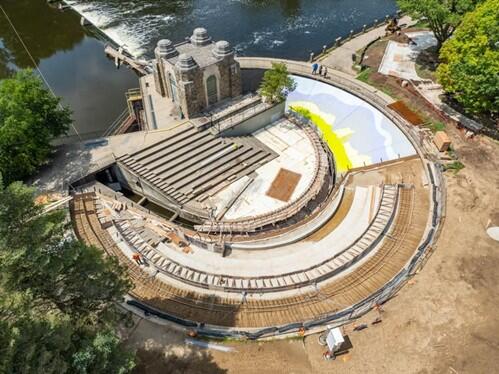
The Brenke Fish Ladder is a hydraulic structure located on the Grand River in Lansing Michigan, built in 1981 to allow fish to bypass the dam and move safety upstream. The Brenke Fish Ladder and adjacent Burchard Park is home to the annual Dam Jam concert with the stage set up at the base of the fish ladder. A $3.4 million construction project was approved which would almost triple the concert seating capacity by having stadium seating within the bowl structure of the fish ladder. The fish ladder bowl was constructed on a concrete lower base slab and retaining walls with uncontrolled fill placed to create the bowl shape. The bowl is capped with a concrete slab. The new stadium seat loading was not suitable for direct bearing on the concrete cap; therefore, the cap would be removed prior to construction of the seating. A soil boring performed in the bowl backfill showed very loose to loose sand fill with varying amounts of clay, organics and building debris to a depth of about 19 feet. Based on the geotechnical investigation, it was determined that the existing fill soil would not provide suitable bearing capacity for the proposed stadium seating. Deep foundation elements were not allowed to bear on the lower slab, so a method to improve the fill soil strength was the sole option. Furthermore, the treatment was restricted to methods that would not damage the existing slab and retaining wall structure.
Solution
Because of the concerns for damage to existing concrete base slab and retaining walls, compaction grouting, rammed aggregate piers and other remedial methods using high impact forces were not considered for the soil treatment. Polyurethane foam injection was selected as the preferred solution for the near surface and deep soil improvement given the ability to perform the repairs in a short period of time without damage to existing concrete structures.
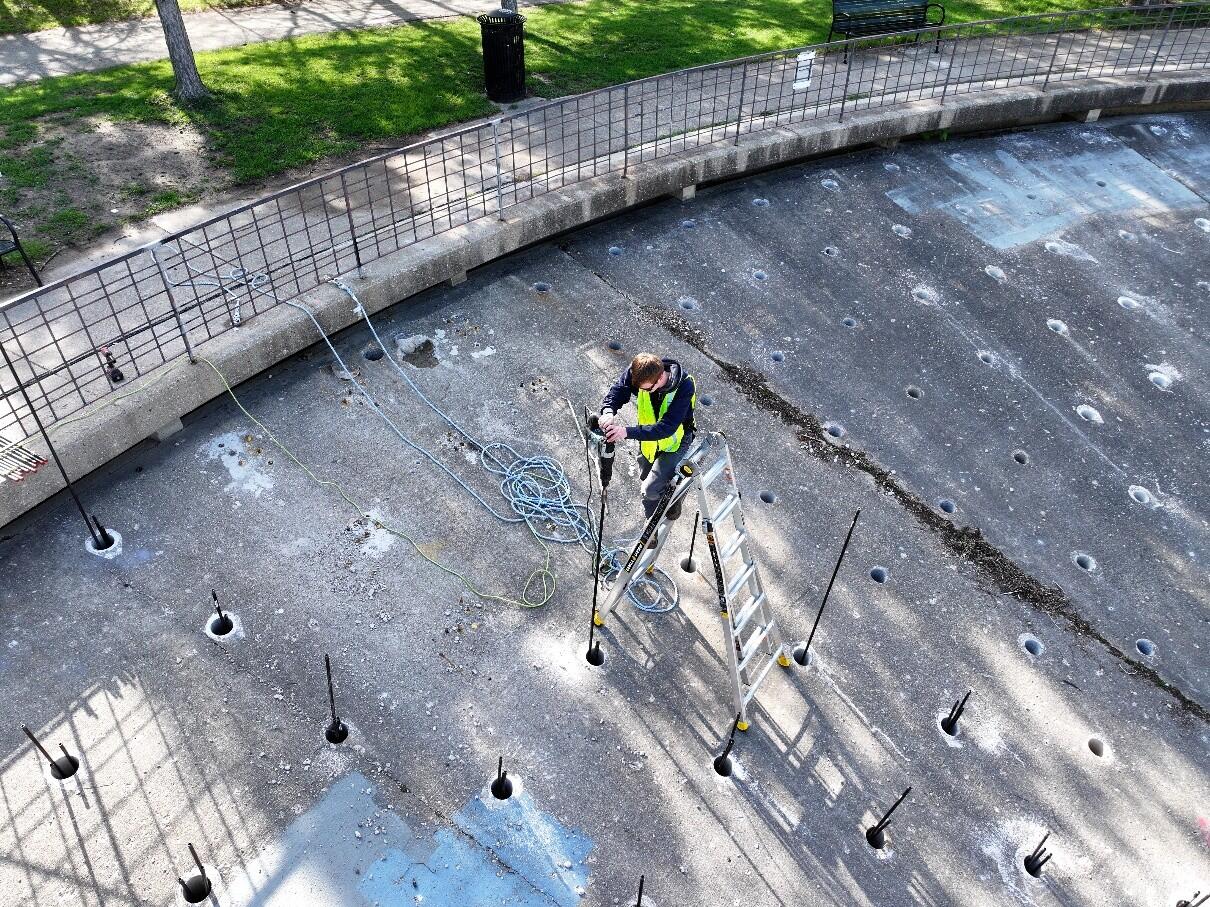
The Polyurethane foam is a two-part, liquid urethane that can be injected below the pavement through small diameter tubes installed to various depths. Once the two parts are mixed, a chemical reaction slowly converts the liquid urethane components into an expansive, strong, and rapidly setting foam material. Supportworks PolyLevel foams are extremely light, with different formulations weighing between 2 to 4 pounds per cubic foot (pcf). Supportworks PolyLevel PL400 mixture was chosen for the application. PolyLevel PL400 has a typical compressive strength of 60 to 70 pounds per square inch (psi) and a free-rise density of about 4 pcf.
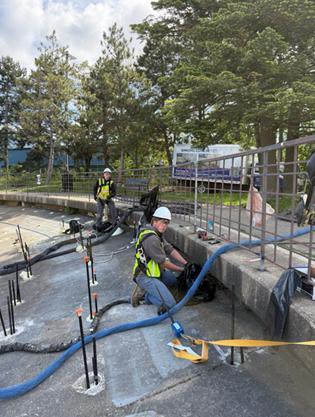
To evaluate the effectiveness of the PolyLevel treatment, a test installation was performed inside the fish ladder bowl with pretreatment and posttreatment testing to verify a suitable increase in bearing capacity. The test installation included nine injection locations at 4-foot centers with injection depths of 3, 7, 11, and 15 feet. PolyLevel was injected at each location/depth until back pressure was observed in the injection tube or 100 lb of foam had been injected. Approximately 1900 lb of foam was injected at the test area, with most of the foam injected at the 3- and 7-foot depths. The pretreatment and posttreatment testing were performed with SPT soil borings and dynamic cone penetrometer (DCP) instruments. Based on the results of the testing an increase in soil strength as high as 78% from the pretreatment soil strength was observed. The posttreatment testing confirmed a suitable increase in soil strength for the stadium seating and the project was approved for the PolyLevel remediation.
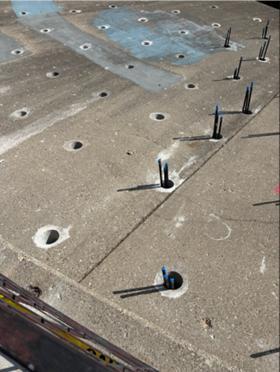
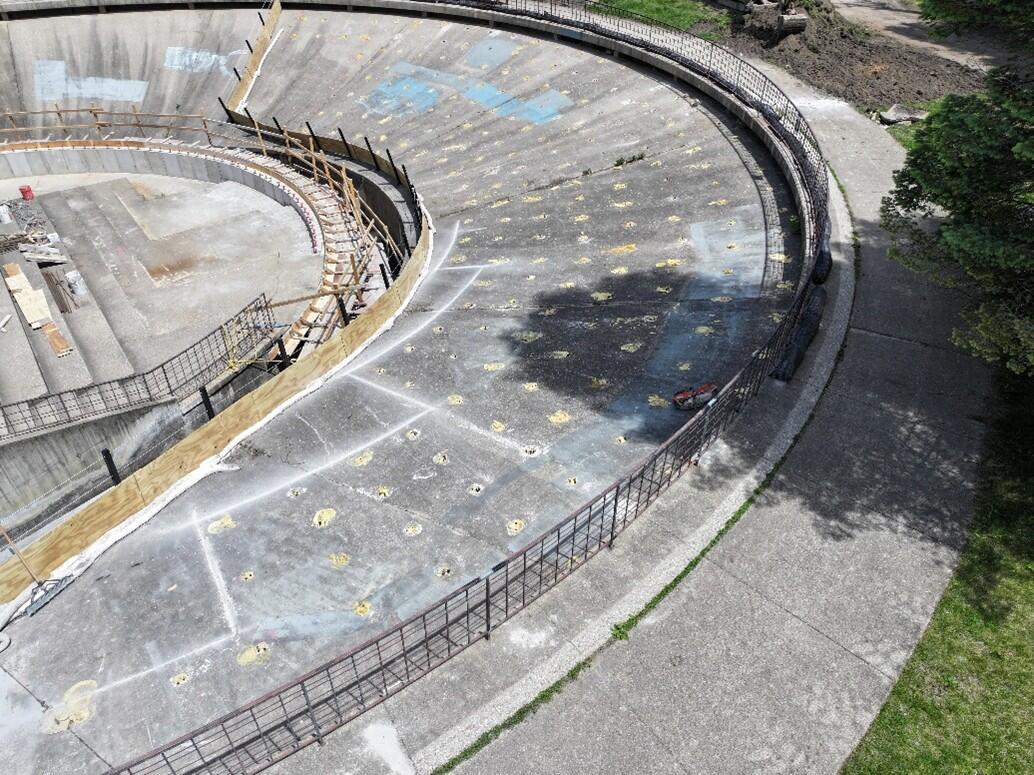
The scope of work for the remainder of the project was slightly different than the scope for the test area. Specifically, PolyLevel injection locations were on a 3.5 by 4-foot grid with injection depths of 3, 6 and 9 feet. The treatment area was approximately 2900 square feet with 206 injection locations for a total of 618 injections. Six-inch diameter concrete cores were performed at each injection location and ½-inch black pipe injection tubes were driven to the required depth to facilitate the PolyLevel injection. PolyLevel was injected using top-down methodology (injecting from shallow to deep injection depths) until back pressure was observed in the injection tube. The total amount of poly injected at the site was about 33,000 lb with individual injections ranging from about 20 to 110 lb and an average injection quantity of 53 lb. Posttreatment DCP testing was performed by third party engineers to determine the soil strength increase from the PolyLevel treatment. Based on the results of the testing, an average bearing capacity of 4,000 psf was confirmed, which well exceeded the required bearing capacity. The PolyLevel injection was completed over a 16 day period.
Project Summary
Products Installed:: 33,000 lb of Foundation Supportworks® PolyLevel® PL400H