

Aviara Flats Pavement Settlement
Challenge
Located in Phoenix Arizona, Aviara Flats is a 372-unit apartment complex constructed in 2022 and covers an approximate 18.5-acre area. By 2025, the southwest portion of the complex exhibited significant pavement distress at driveways and parking lots. The settlement resulted in cracking in the pavement and issues with surface water drainage during rain events. The parking areas have solar panel canopies with electrical vaults and buried electrical conduits throughout. There was concern that future settlement of the pavement could compromise the buried electric utilities. Based on the results of a GPR survey, six areas were selected for remedial treatment to improve the pavement subgrade and deeper soils to limit future settlement. New asphalt pavement would be placed after the soil treatment. A geotechnical investigation performed in 2020 showed about two feet of sandy clay fill underlain by medium stiff to stiff clay to depths of 15 feet or so. A remedial method was required that could improve the pavement subgrade and deeper soil without damaging the existing underground utilities. An aggressive timeline required that the work needed to be completed in one month.
Solution
Because of the concerns for damage to the buried conduit lines, removal and replacement, compaction grouting and other intrusive remedial methods were not considered for the remediation. Polyurethane foam injection was selected as the preferred solution for soil improvement of the near surface and deeper soils given the low-cost relative to other remedial methods and the ability to perform the repairs in a short period of time without damaging the existing conduit lines.
The Polyurethane foam is a two-part, liquid urethane that can be injected below the pavement through small diameter tubes installed to various depths. Once the two parts are mixed, a chemical reaction slowly converts the liquid urethane components into an expansive, strong, and rapidly setting foam material. Supportworks PolyLevel foams are extremely light, with different formulations weighing between 2 to 4 pounds per cubic foot (pcf). Supportworks PolyLevel PL400 mixture was chosen for the application. PolyLevel PL400 has a typical compressive strength of 60 to 70 pounds per square inch (psi) and a free-rise density of about 4 pcf.
The scope of work included PolyLevel injections at depths of 3.5 and 7.5 feet on a 4-foot grid pattern. Select areas were treated at a depth of 3.5 feet without the deeper injection. One area of the site had been excavated down to 4 feet and required injection depths of 3.5 feet below the excavation. One-half inch diameter conduits were driven to the required depth to facilitate the PolyLevel injection. Ground surface movements were monitored during the PolyLevel injection. PolyLevel was injected using top-down methodology (injecting from shallow to deep injection depths) until back pressure was observed in the injection tube. To meet the one-month timeline, Arizona Foundation Solutions utilized three poly rigs with a crew of two people per rig. Once the process began, the poly crews were able to install as much as 2,000 lb of poly per day. For the project, an average of 28.4 lb of PolyLevel was installed at 666 injection ports for a total of about 18,900 lb. The PolyLevel injection was completed over a three-week period.
Project Summary
Products Installed:: 18,900 lb of Foundation Supportworks® PolyLevel® PL400
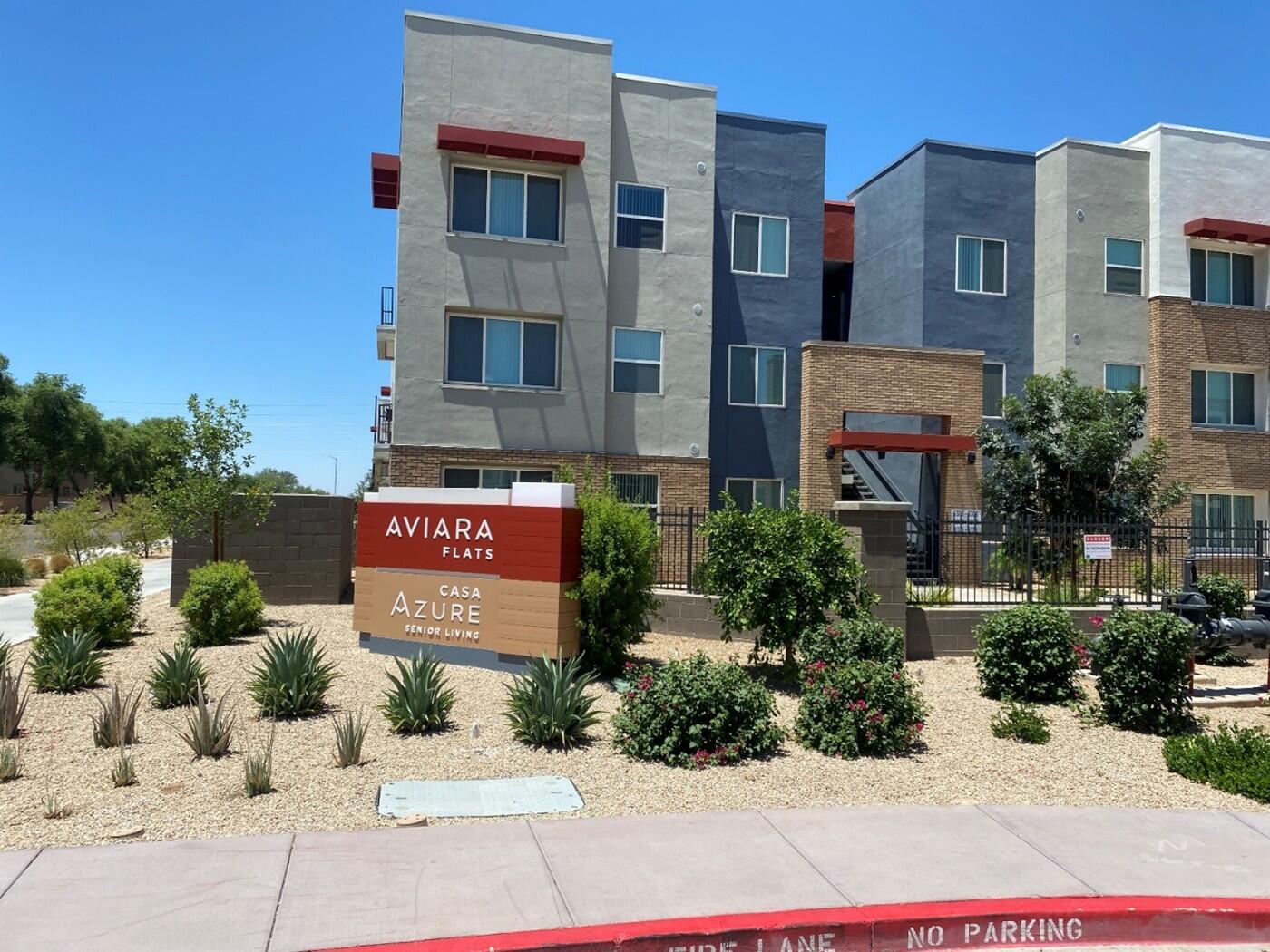 Aviara Flats apartment complex entrance
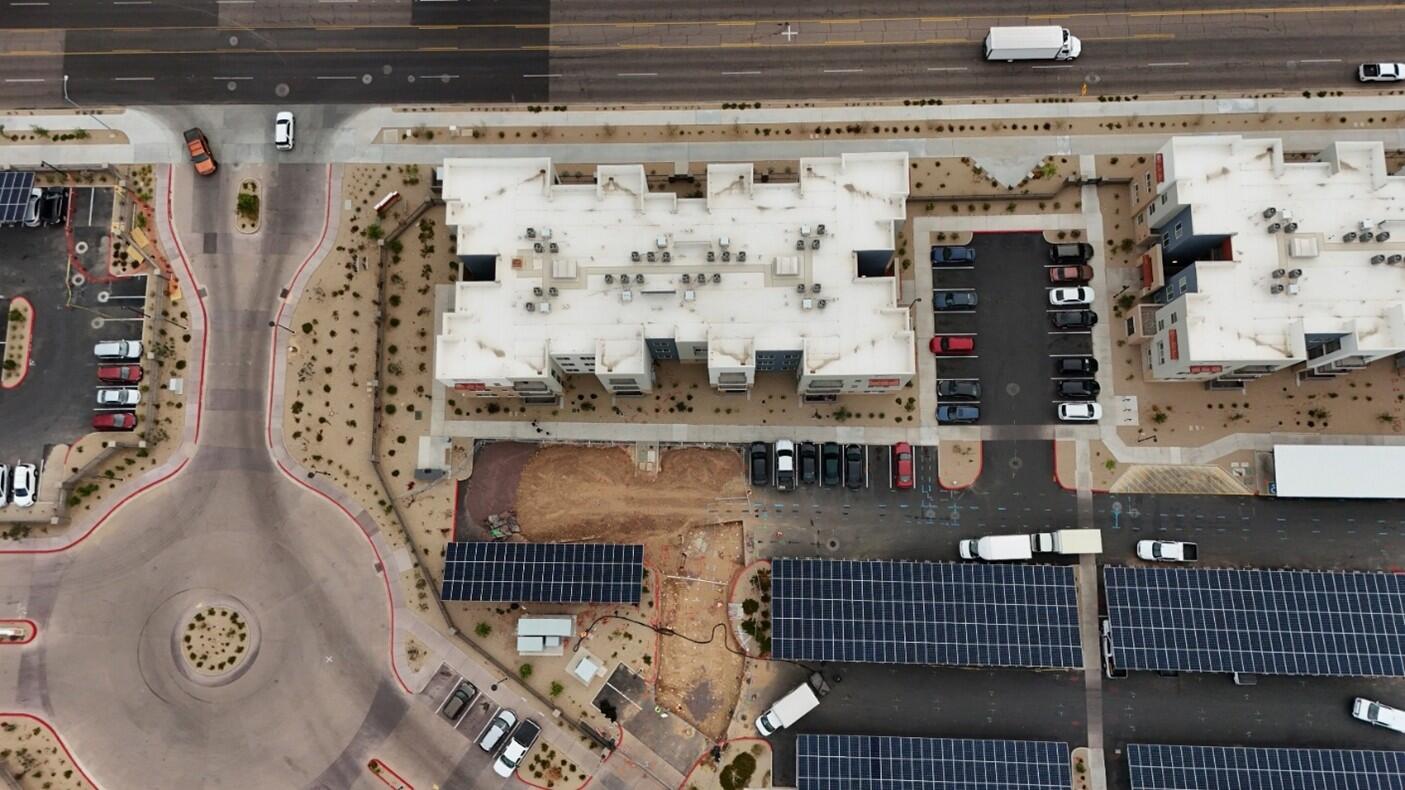 Overview of main work area
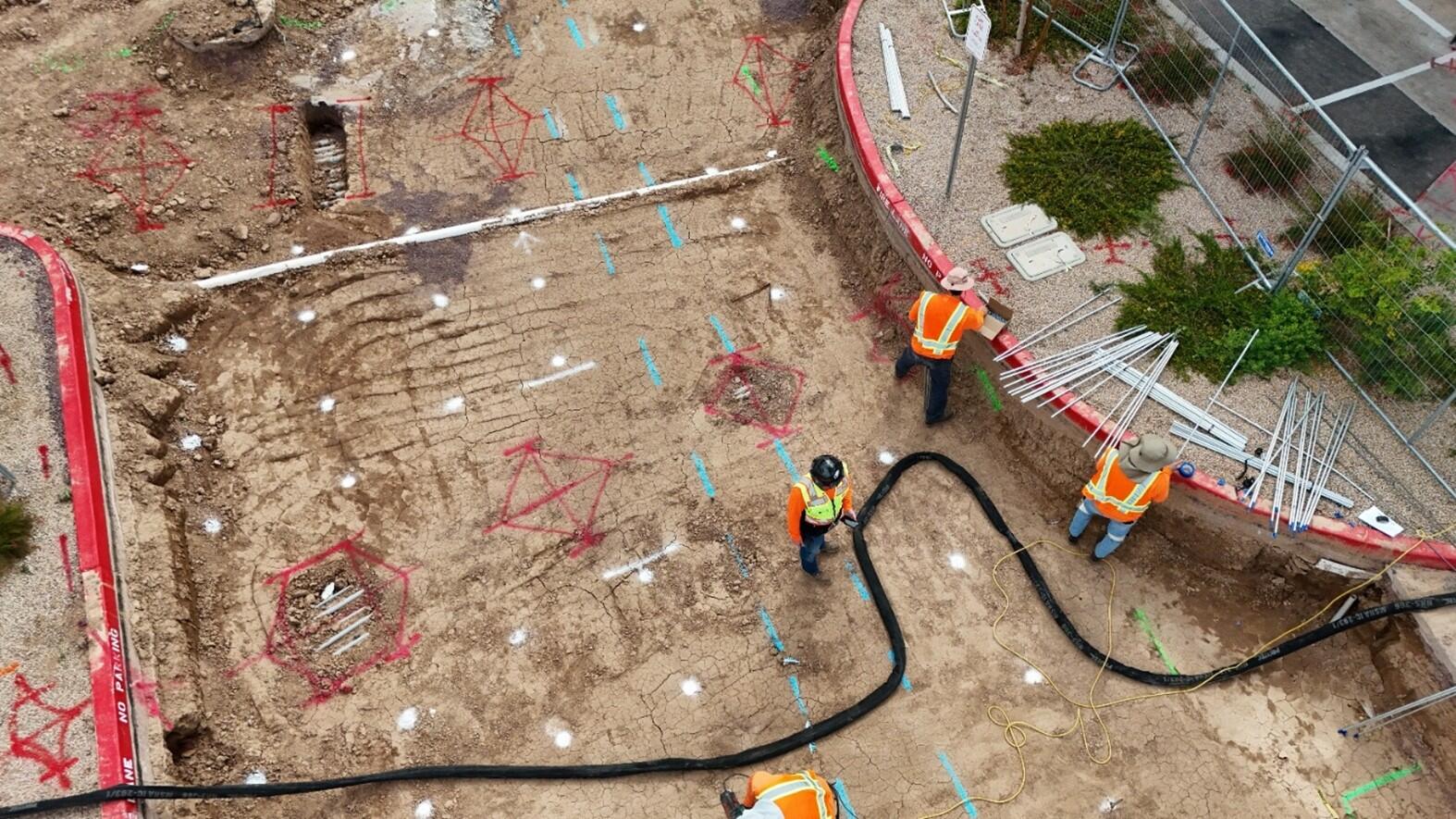 Aerial view of excavated area with utilities marked and partially exposed.
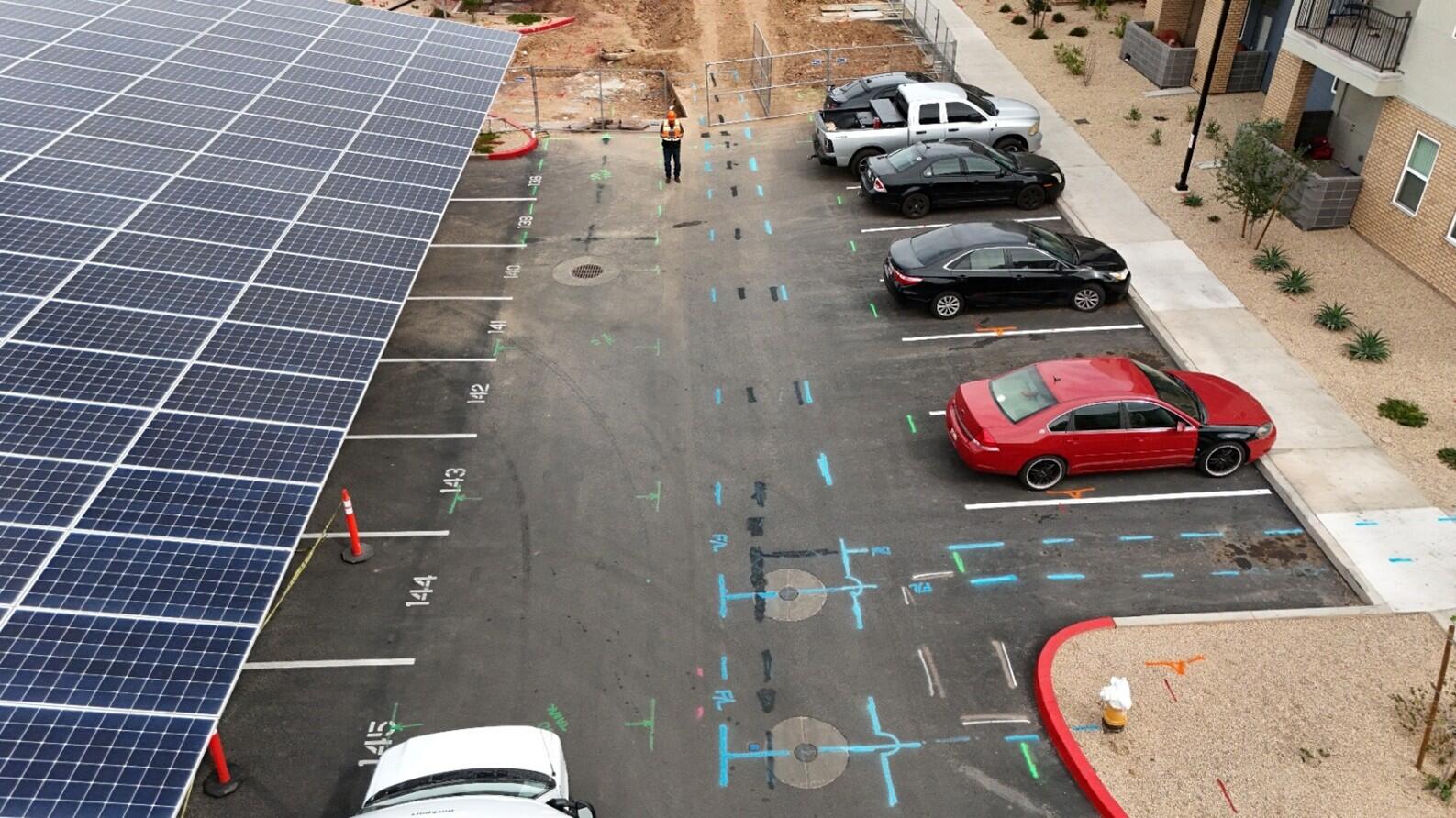 Utilities located at parking area
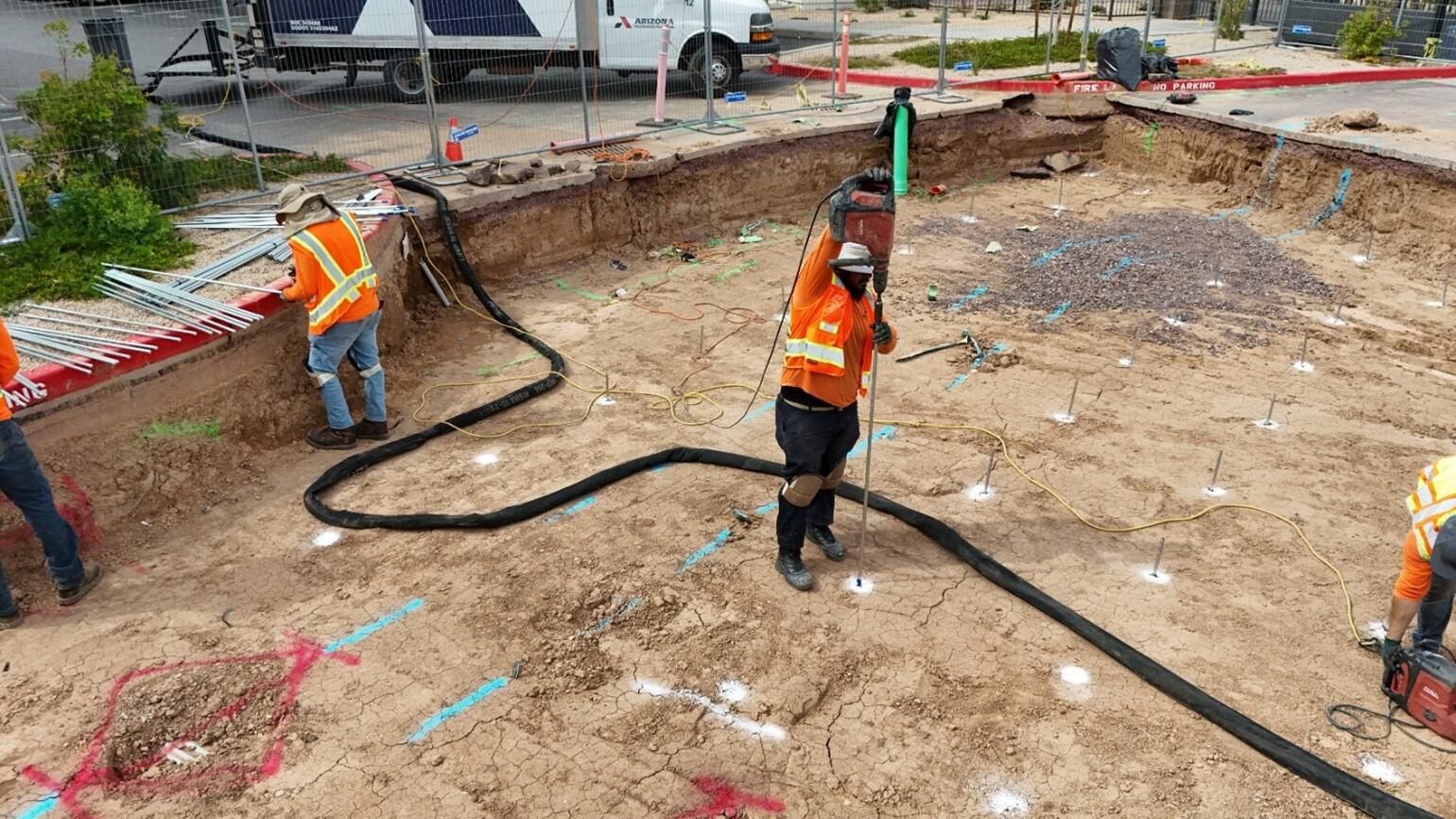 Driving injection tubes
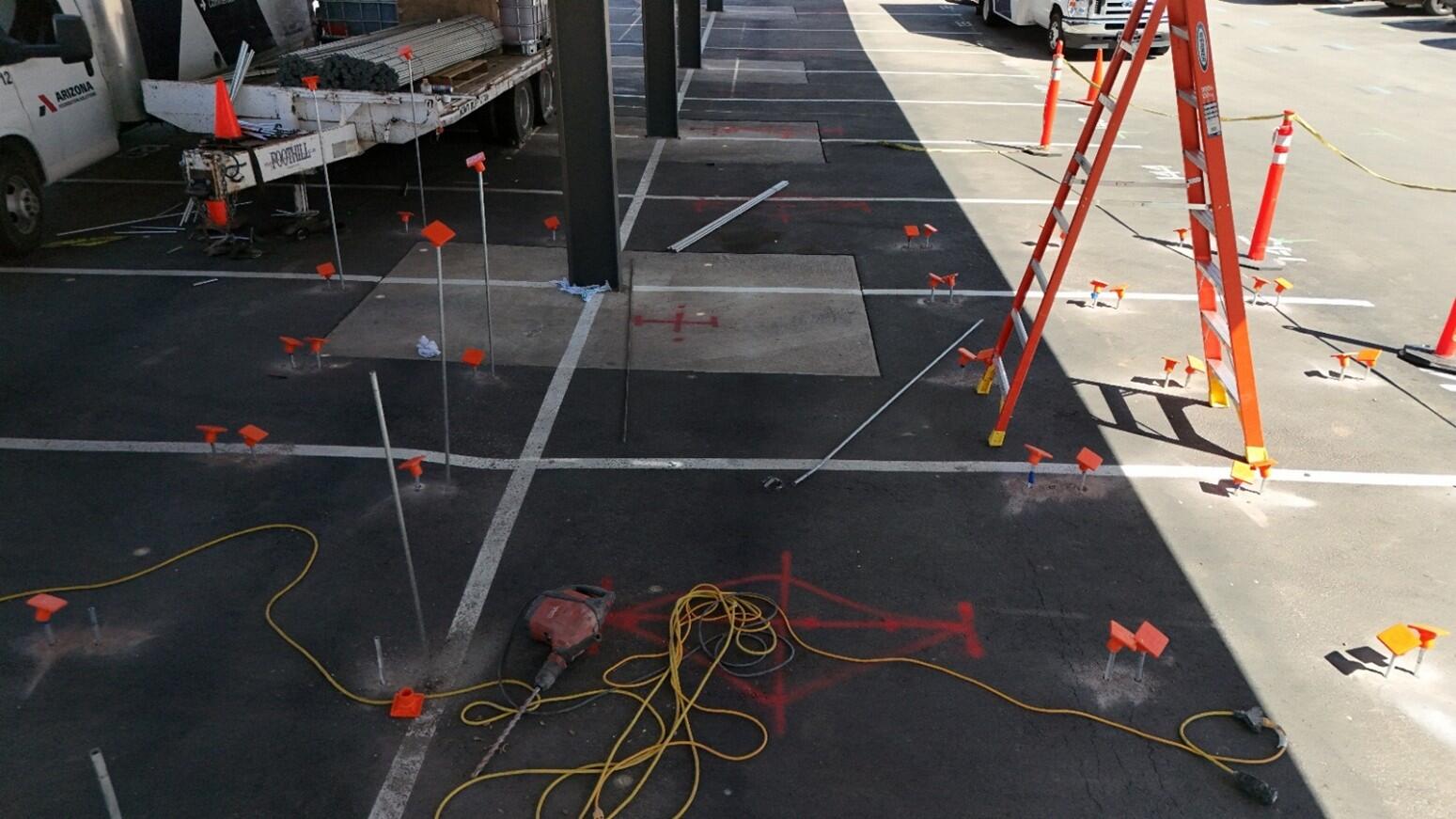 Injection tubes installed under solar panels
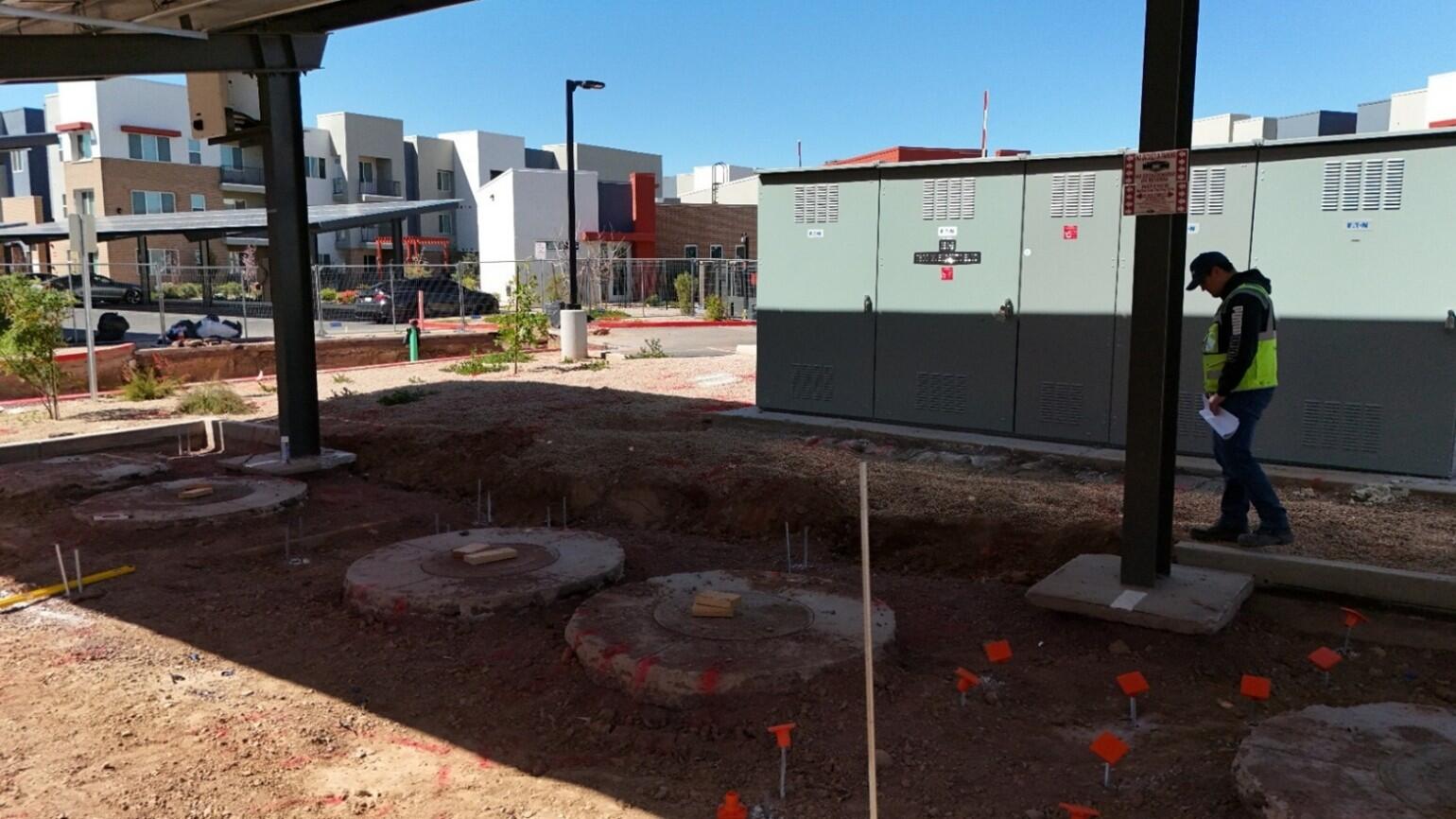 Injection tubes installed at electric conduit vaults
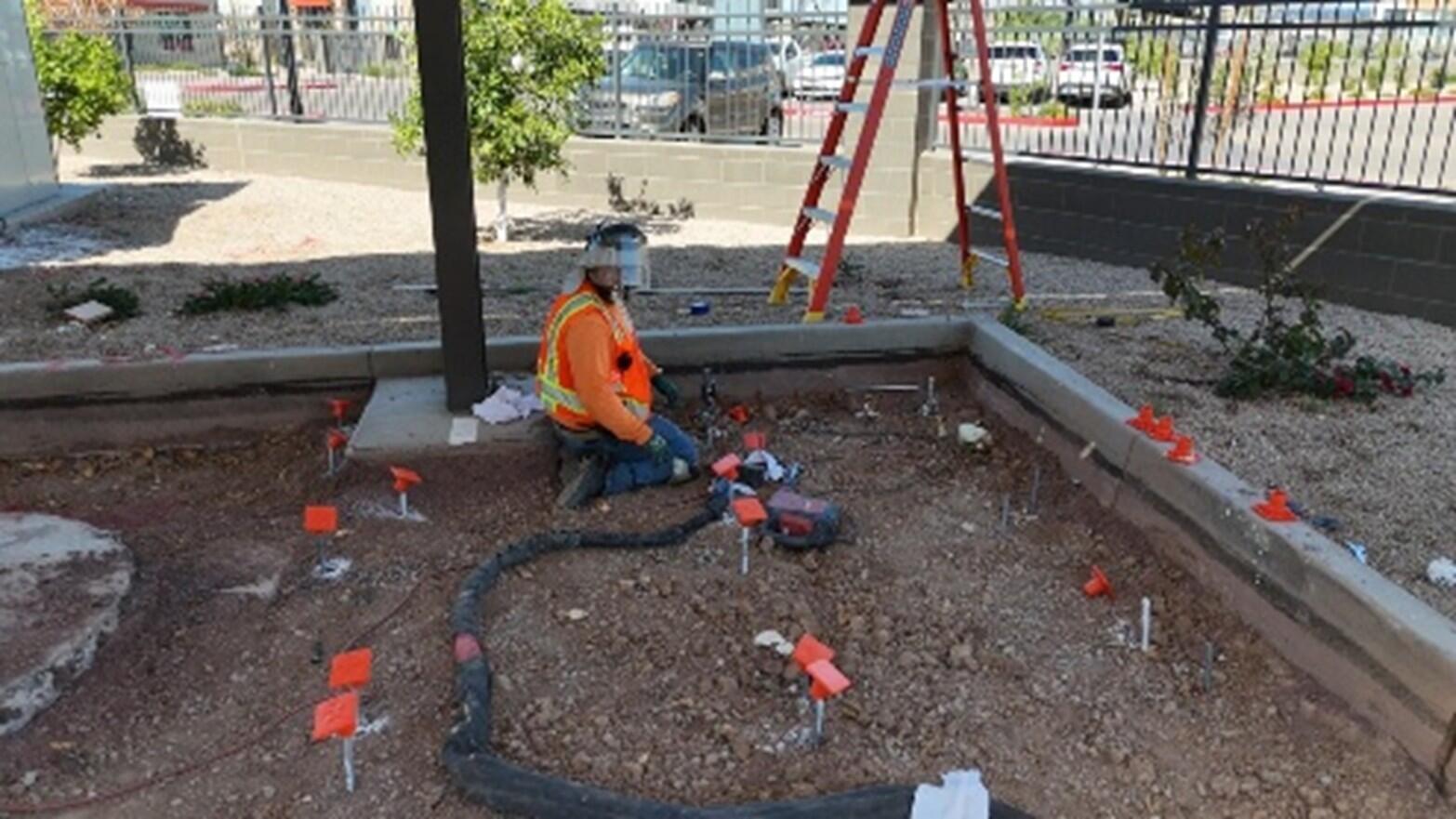 Installing PolyLevel at electrical vaults under solar panel area
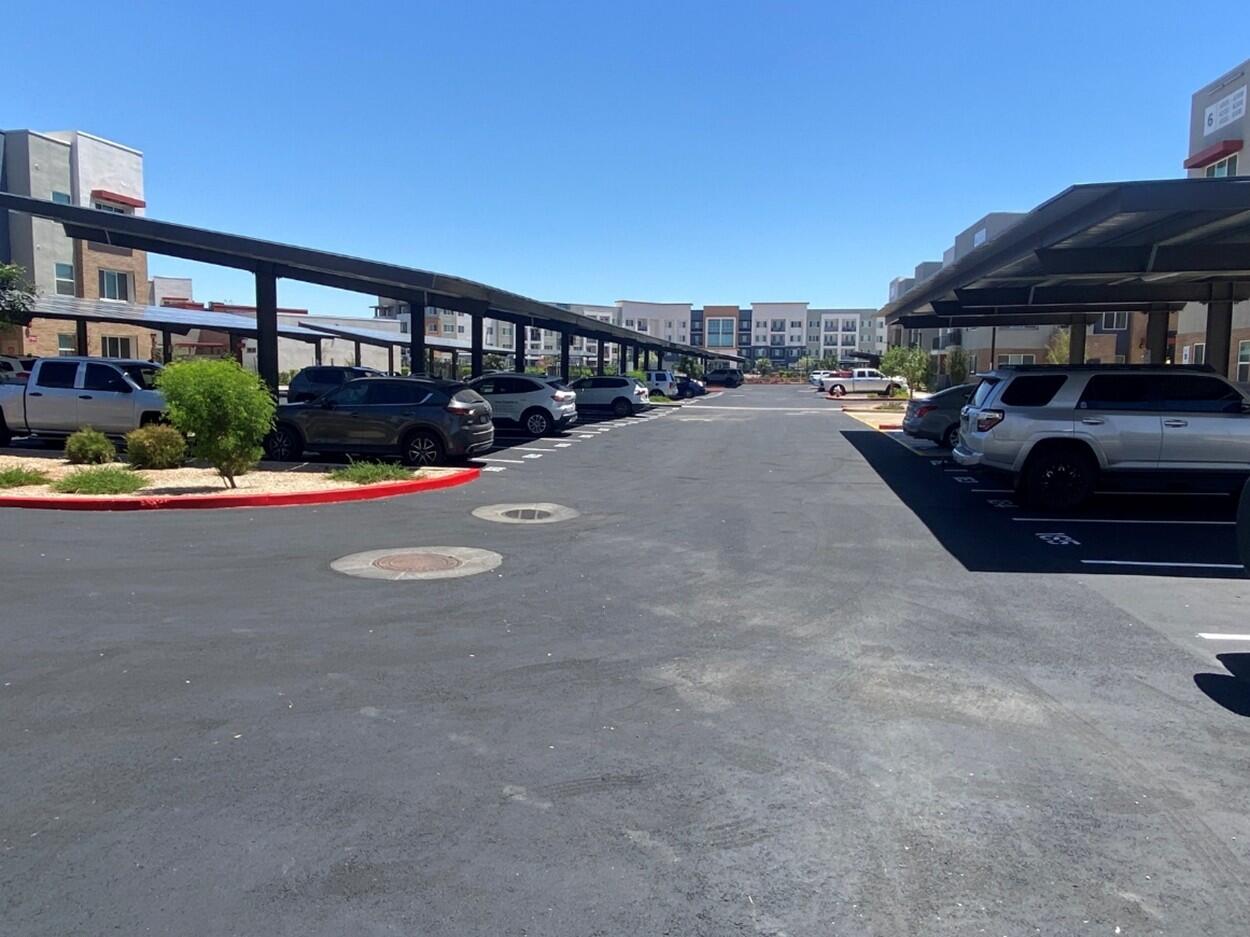 Project completed at parking and roadway area
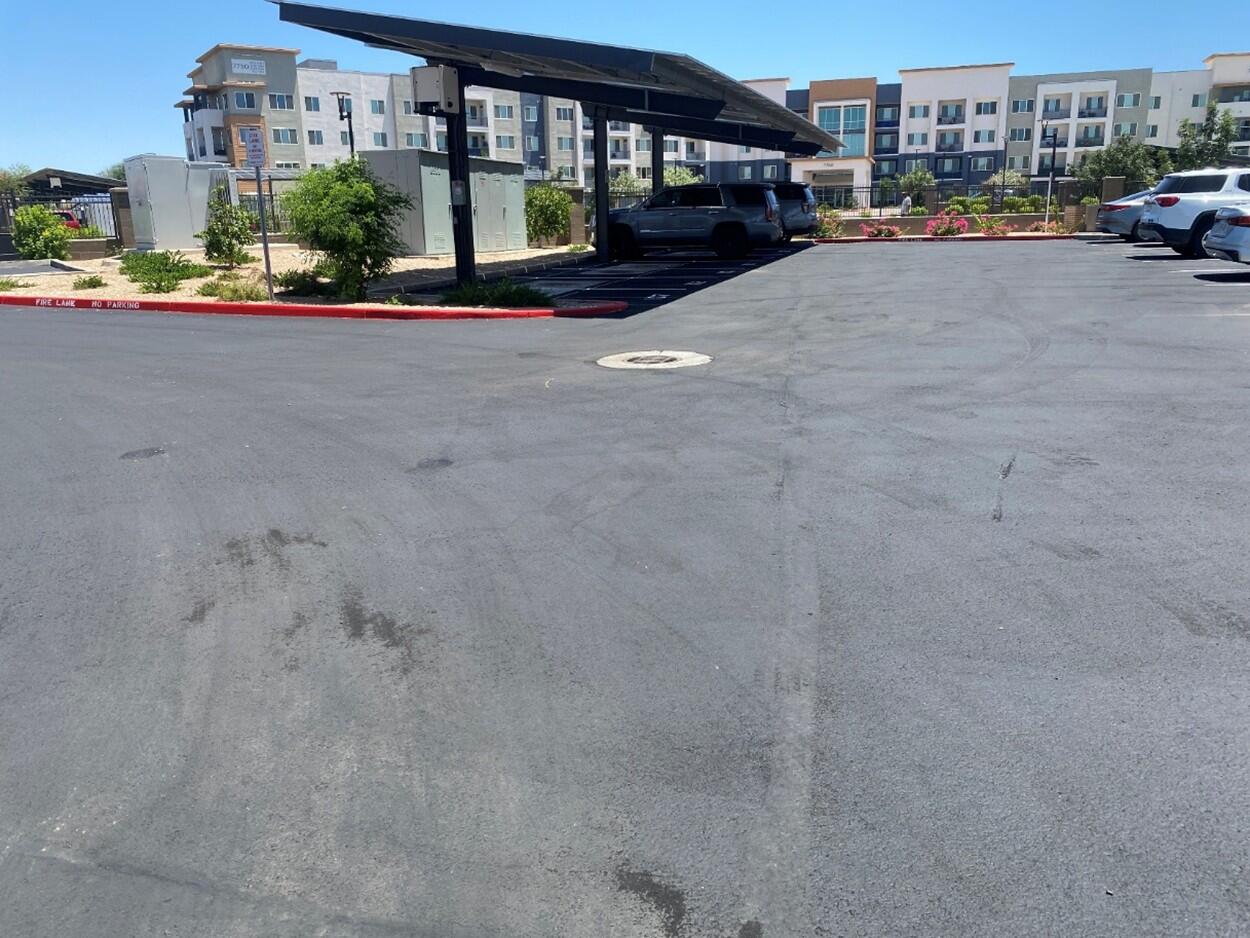 Project completed at the excavated area