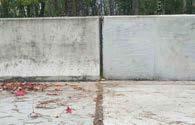
Jacksonville Bridge Approach
Challenge
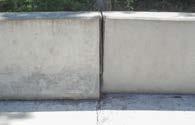
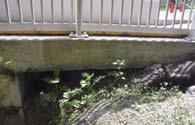
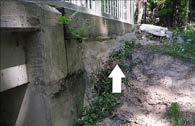
A high-traffic bridge approach which was experiencing settlement in Jacksonville, Florida. An eight (8) to 12 inch void had developed under the approach slabs due to erosion and poor compaction of soils. During initial construction, sleeper slabs were installed at the end of the approach slabs to prevent settlement; however, the sleeper slabs added additional weight which further compromised the supporting soils, which in turn accelerated slab settlement and soil consolidation. This condition not only impacted the approach slabs but also caused the adjoining sidewalk to settle, resulting in both poor driving and walking conditions.
Solution
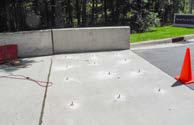
The contractor installed 1,300 pounds of PolyLevel 400 over the course of two (2) days. They were able to completely fill the void and lift the road and walkways back to their original elevation. PolyLevel’s small footprint allowed one lane of traffic to remain open during the entire installation and reopen the entire road to traffic immediately upon completion.
PolyLevel is a two-part urethane that expands into a rigid foam. This expansion is the result of a chemical reaction which converts the liquid urethane components into a strong, rapidly setting foam material. Once injected through small 5/8th inch drilled “ports” in the slab, PolyLevel foam fills voids, stabilizes slabs and lifts concrete. In its foam state PolyLevel is extremely light, weighing only two (2) to six (6) pounds per cubic-foot (pcf). Other void-filling or lifting materials can weigh upwards of 120 pcf, adding significant weight to the already overburdened subgrade material. This can contribute to even further settlement issues very similar to the sleeper slabs initially installed. With a typical installed compressive strength of 100 pounds per square-inch (psi), PolyLevel provides the necessary resistance to support even the heaviest loads.
Project Summary
Product Installed: 1,300 pounds Polylevel 400, 100 psi Compressive Strength, 146 psi Tensile Strength, 69 psi Shear Strength, 19:1 Expansion Rate, 6 pcf Typical in Place Density